Back in 2024 we started work on three drill books: Meyer Rapier 1, Meyer Longsword 1, and L’Ange Rapier. After countless hours of research, testing, and writing we have finally completed the trilogy. Our new drill book weighs in at 254 pages, roughly a hundred pages longer than the translation it supplements. (And like all of our drill books, you really should be using it alongside with translation.)
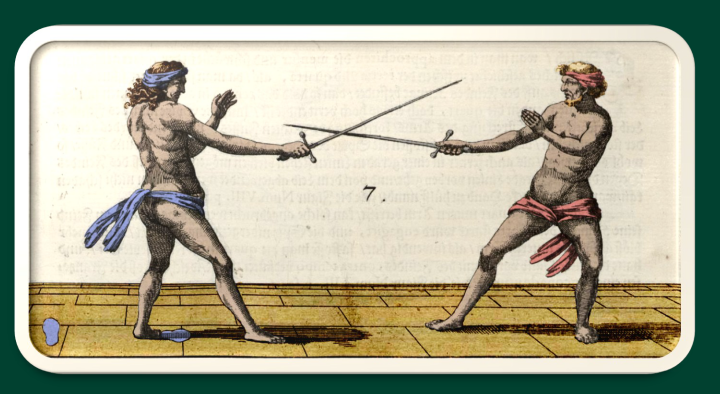
The page count can be a bit misleading. Please we always start each lesson at the top of a page, we sometimes end up with a page that only contains a couple sentences of commentary and is otherwise blank. (Check out the free PDF version to see what we mean.) Consider it to be a place to put your own notes. That’s why we use uncoated paper; we really do expect people to write in the drill book, adding their own insights and corrections.
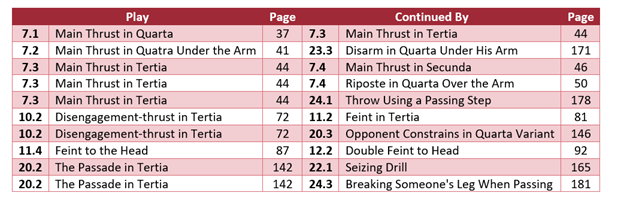
There are about 86 plays in the drill book, but that number is also misleading because it doesn’t include the drills we invented to help explain the plays. Also, do you count plays that are just continuations of other plays?
For example, play 7.3 contains all of play 7.1. And 7.4 (which is actually 2 plays) contains 7.1/3. These aren’t counters, each just adds additional steps to the end of the previous play. Here are the most obvious continuations we found.
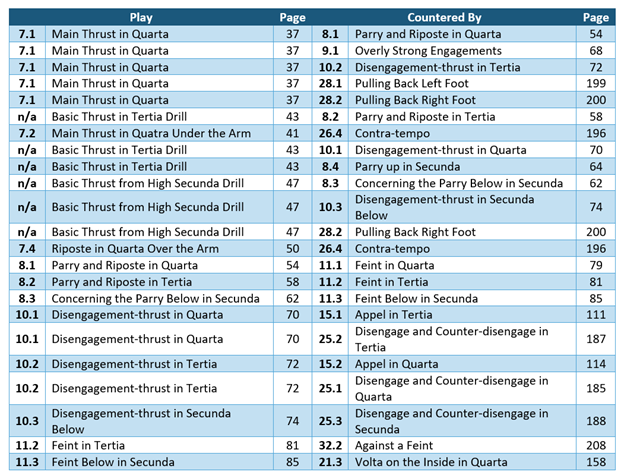
And then there are the counters. Sometimes the counters are considered to be part of the play. When this happens, they appear as a variant under the same heading. When the counter is found on a different page, you’ll find it in the table below.
Which is actually so long that we needed a second page.
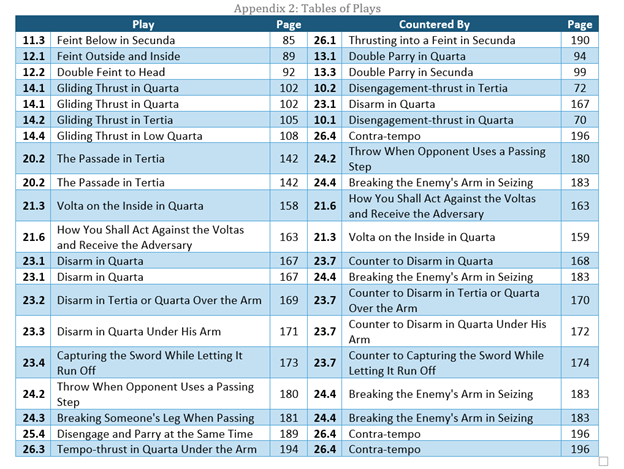
That’s why we love this source. All of the plays build on each other so you are constantly practicing the fundamentals even as you are learning new skills.
What does L’Ange cover?
The short answer is “basically everything found in Italian rapier”. You’re not going to get a lot of depth, but he does touch on pretty much all of the essential skills. Where Capo Ferro will give us eight plays on how to deal with being constrained on the inside, L’Ange gives you two: parry or disengage.
The main sequence is Guards -> Constraints -> Thrusts -> Parries -> Disengagements -> Feints -> Double Feints -> Double Parries. This is a fairly comprehensive course suitable for both novices and skilled fencers looking to refine their fundamentals.
From there you can work through the other topics in pretty much any order. They include: Lunges, Beats, Jumps, Passing Steps, Voltas, Disarms, Throws, Left-hand Parries, Proceeding with Resolution, Angled Thrusts, Lowered Thrusts, Left-handed fencers, and more.
What does L’Ange not cover?
Cuts. There are a couple cuts performed after a parry, but for the most part you’re not going to learn how to use cuts from this source. For that look to German or Bolognese sources from the previous century.
Unusual Stuff
Unlike most 17th century rapier manuals that I’ve read, this one includes street fighting. L’Ange doesn’t hesitate to tell you to break an arm or leg if the opportunity arises. There is even a (quite dubious) neck break in the book. This isn’t just the gentlemanly sport that some manuals present and I really appreciate that.
L’Ange also spend far more time talking about the high guard than other long rapier sources I’ve worked with. He calls it Secunda, but most rapier fencers seeing it will say that it’s clearly Prima.
Other Active Projects
Currently we’re finishing up Meyer Polearms 1: Half-Staff. It still needs some diagrams and editing, but we’re really close.
Meyer Rapier 2 is being actively researched. It’s going to be a massive book, probably larger than volumes 1 and 3 combined. We’ll post a note when the first preview is ready.
Our study of Fabris just started. We’re looking to split it into 6 volumes, three for each of his two books. Again, we’ll post a note when the first preview is ready. (We have studied this source in the past, but not in a systematic fashion.)